
Artificial Light
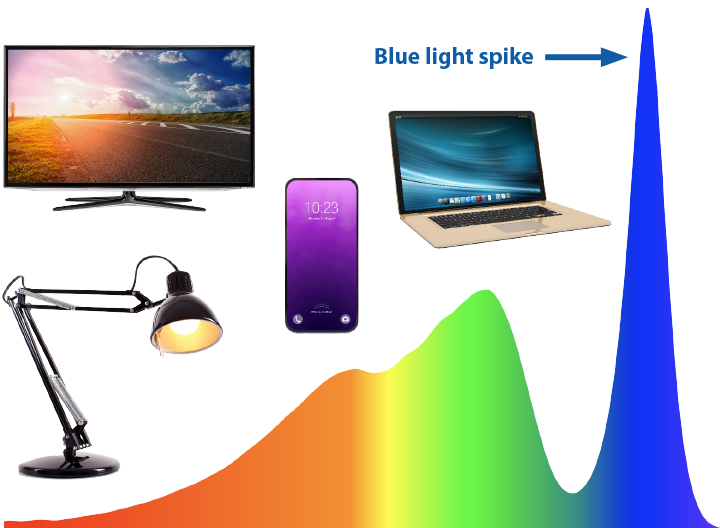
Modern humans replaced the sun with artificial light, subsequently disconnecting their biological clocks from nature. Artificial light includes the light emitted by cell phones, computer screens, flat-screen TVs, and indoor lighting. Artificial light is dominant in blue frequencies and not balanced by the other colors of the rainbow. Below is a graph depicting what your eyes perceive when viewing a flat-screen TV. Notice the significant blue-light spike and the unbalanced spectrum of colors.
NEGATIVE EFFECTS OF BLUE LIGHT
Artificial blue light contributes to the breakdown of the retina, which in turn can lead to deterioration in both the retina and the brain (References 1; 655).
Exposure to artificial blue light accelerates biological aging processes (Reference 656).
Artificial blue light causes hypoxia (decreased oxygen) (References 20; 112).
Blue light can reduce melanin levels in the brain, potentially impacting its protective functions (Reference 3).
Excessive exposure to artificial light—particularly at night—can disrupt melatonin and cortisol levels, increasing the risk of depression, obesity, and other health issues (Reference 657).
Artificial light can interfere with the brain’s internal clock, potentially impacting emotional regulation and mood (Reference 657).
A 2025 study published in the journal Clinical Epigenetics found that exposure to artificial light at night (ALAN) was associated with increased LDL cholesterol levels (Reference 658).
According to the National Institutes of Health (NIH), artificial blue light, particularly when experienced at night, is associated with metabolic disruptions, including increased triglycerides, total cholesterol, and LDL cholesterol, alongside potential reductions in protective HDL. Chronic exposure acts as a metabolic stressor, contributing to gut dysbiosis and dysregulation of fat‑related gene expression, thereby increasing the risk of metabolic disease and obesity (Reference #3005).
Artificial blue light can alter mitochondrial function, resulting in a slowdown of electron transport within the mitochondria (Reference 44).
Children who frequently use screens emitting blue light are at increased risk for mental health and sleep problems. Extensive scientific research supports these findings (Reference 38).
Artificial blue light at night disrupts melanopsin. Melanopsin is a light‑sensitive protein in intrinsically photosensitive retinal ganglion cells (ipRGCs) that plays a crucial role in regulating circadian rhythms, promoting alertness, supporting mood, and controlling pupil size (reference 26).