
The Problem with Supplements
As reported by PBS News, more than two‑thirds of Americans take dietary supplements. An overwhelming majority—84%—believe these products are safe and effective. That confidence may be misplaced.
There are serious downsides to protein powders and supplements that most people never hear about. In many cases, supplements don’t just fail to help—they actively make things worse. Mega‑dosing isolated nutrients ignores the complex, interconnected way nutrients function together in whole foods.
1. Supplements Disrupt Coupled Relationships
The human body operates through tightly regulated “coupled relationships,” where nutrients work in balance with one another. For example, calcium and magnesium play opposing roles in muscle function—calcium triggers contraction, while magnesium enables relaxation. Vitamins A and D also function as a pair; when vitamin A is driven too high, it can undermine vitamin D signaling.
These coupled relationships are easy to see in nature. When Yellowstone authorities eliminated wolves in the 1920s, the ecosystem fell out of balance in what became known as a trophic cascade. With their primary predator removed, elk populations surged, leading to widespread overgrazing. Vegetation along riverbanks disappeared, soil erosion intensified, and the very shape of streams and tributaries changed. Removing one regulator triggered a chain reaction—much like isolating and flooding your system with a single nutrient can disrupt the body’s internal chemistry.
2. Supplements are processed food
Many nutrition influencers warn against processed foods, yet in the same breath recommend supplements. This is a contradiction. Supplements are themselves highly processed products—manufactured in chemistry labs, not grown through photosynthesis or shaped by natural biological systems.
Unlike whole foods, which are built by sunlight, water, and living ecosystems, supplements strip nutrients down to isolated chemical components. In doing so, they remove the context, balance, and natural integration that gives food its biological intelligence. Calling supplements “natural” ignores the fact that they are, by definition, a form of ultra‑processed food.
3. Supplements have heavy hydrogen (deuterium)
Deuterium is a heavier form of hydrogen that interferes with mitochondrial function—the cell’s energy‑producing machinery that powers the body.
Hydrogen is the first element on the periodic table and the most abundant element in the universe, but it does not exist in a single form. What many nutritionists overlook is that hydrogen occurs primarily as either light hydrogen (protium) or heavy hydrogen (deuterium).
Compared to light hydrogen, deuterium has nearly twice the mass, which makes it metabolically unfavorable. Because mitochondria operate according to the law of least energy, they struggle to efficiently process deuterium. As a result, the body works to keep deuterium levels low—especially in sensitive areas like the mitochondria—to protect proper energy production.
Deuterium is present in small amounts in drinking water (H₂O), but deuterated supplements are different. They concentrate heavy hydrogen and deliver it directly into the body—bypassing the natural filtering and regulation that typically protect mitochondrial function.
4. If your body makes it, you shouldn’t take it.
For example, more than 95% of the body’s melatonin is produced within the mitochondria of cells throughout the body. If supplemental melatonin is needed, it suggests something is interfering with natural production.
Melatonin supplements contain heavy hydrogen (deuterium) incorporated into their chemical structure, whereas melatonin produced naturally by the body carries light hydrogen. As a result, supplements may work initially but tend to lose effectiveness over time as deuterium accumulates and further disrupts mitochondrial function.
5. Supplements have heavy metals
Many dietary supplements are contaminated with heavy metals, including lead, mercury, cadmium, and arsenic. These metals are biologically toxic and have been linked to serious health effects such as cancer, cognitive decline, and weakened bone integrity.
Because supplements are often made from concentrated plant or mineral extracts, contaminants can become concentrated as well. Even products marketed as “clean” or “natural” are not immune—testing standards vary widely, and consumers are rarely informed about cumulative exposure over time.
6. Supplements are a modern experiment.
Modern dietary supplements are a relatively recent invention, emerging primarily in the early 20th century (roughly 1910–1940) following the discovery of vitamins. While ancient cultures relied on whole foods and natural remedies, commercial vitamin pills—such as Mastin’s Yeast Vitamin Tablets—did not appear until around 1916, with mass production and widespread marketing of multivitamins accelerating in the 1950s to address overt nutrient deficiencies.
Whether you believe humans have existed for 6,000–7,000 years or have evolved over millions of years, supplements are undeniably a late arrival. Humans survived—and often thrived—long before synthetic supplementation existed. This raises an important question: what changed in the modern world that made supplements seem necessary?
One of the most profound shifts was the introduction of the electric power grid in 1893, which became widespread by the 1930s and 1940s. Artificial lighting fundamentally altered human behavior and biology. Since around 1930, disease patterns have shifted dramatically, with a sharp decline in deaths from infectious diseases and a corresponding rise in chronic, non‑communicable, and degenerative conditions such as heart disease, cancer, and diabetes.
An increasingly indoor lifestyle meant lights stayed on well past sunset—a clear disruption of natural circadian biology. Natural sunrise and sunset cues were replaced with artificial bulbs. At the same time, while humans extended their nights with artificial light, they also began blocking natural sunlight during the day. Sunglasses surged in popularity in the 1930s, driven in part by Hollywood fashion, further separating humans from the natural light environment they evolved under.
7. Supplements provide the chemical signal, not the photonic power.
Unlike supplements, real food created by the sun carries a unique light frequency—a “light signature”—imprinted during photosynthesis. This photonic information reflects the strength, duration, and rhythm of the sun cycle and becomes embedded in the molecular structure of the food itself.
By contrast, supplements manufactured in a lab are not alive. They carry only the chemical signal, stripped of light, context, and biological coherence. Without photonic power, signal density, or fidelity, supplements provide an incomplete imitation of what whole, sun‑grown foods naturally deliver.
For example, oral vitamin D provides only the chemical signal of sunlight exposure, without the light‑based (photonic) energy that normally accompanies vitamin D production in the skin. Because vitamin D synthesis is a light‑dependent process, supplements are incomplete—they bypass the broader biological effects of sunlight that support cellular signaling
AMINO ACIDS
According to Consumer Reports, many popular protein powders and amino acid supplements contain detectable levels of toxic heavy metals, including lead, arsenic, and cadmium. Testing has shown that more than two‑thirds of evaluated products exceeded safety thresholds for lead, with plant‑based, vegan, and organic powders often exhibiting higher contamination levels than dairy‑based alternatives.
Commercial amino acid supplements are generally not tested for deuterium content, even though deuterium is likely incorporated during manufacturing. The way amino acid supplements are produced is fundamentally different from— and contrary to—consuming protein from whole foods like fish, shellfish, or meat.
Most amino acid supplements are made through microbial fermentation, a process in which bacteria or yeast are fed refined, plant‑based feedstocks such as molasses or sugar. As these microbes metabolize the substrate, they synthesize specific amino acids, which are then isolated, purified, and dried into powders or tablets. This industrial process strips amino acids of their natural food context and differs entirely from how the body encounters and processes amino acids from whole‑food protein.
COLLAGEN POWDERS
Collagen supplements are made from cow hides and connective tissues, which are byproducts of the meat industry. These materials are heavily processed—boiled and hydrolyzed into isolated peptides—to make them easier to consume in powders or capsules.
In contrast, properly prepared, organic bone broth preserves collagen in a more natural food context, along with its supporting amino acids and minerals. For obtaining collagen, bone broth is the preferred option over processed collagen supplements.
CREATINE
Creatine supplements are often high in deuterium, whereas creatine from whole foods like meat and fish is not deuterated.Supplement manufacturing can also introduce byproducts such as DCDA and triazines, which carry potential cancer concerns. And even when a Certificate of Analysis claims a product is “pure,” it may not test for—or disclose—these contaminants, leaving you to rely on trust rather than transparency.
The human body naturally produces creatine, synthesized primarily in the liver, kidneys, and pancreas from amino acids. It makes roughly 1–2 grams per day, with about 95% stored in skeletal muscle for energy production; the remainder comes from dietary sources like red meat and fish. Eating high‑quality protein provides everything the body needs to produce creatine on its own—without contaminants. And because mitochondrial function is tightly linked to light–dark cycles, improving your light environment supports natural creatine production as well.
FISH OIL
The DHA in fish oil comes from the ocean food chain. Algae make it, fish eat the algae and convert DHA into a specific form (called SN‑2), and that is the only form the human brain can use. Instead of spending money on fish oil supplements, invest in high‑quality seafood such as salmon and oysters. Fish oil supplements can also oxidize and go rancid when exposed to heat—and there’s no way to know how long they’ve sat in hot warehouses or shipping containers before reaching you.
IODINE
A seafood‑rich diet is the best way to obtain iodine. Fish and shellfish are naturally high in iodine because they absorb it directly from seawater, with shellfish—such as oysters, crab, and shrimp—providing the highest amounts. Fatty fish like salmon also contribute meaningful levels. As a result, seafood is one of the most reliable natural sources of iodine for supporting healthy thyroid function.
PROTEIN POWDER
Protein powders have deuterium which hinders mitochondrial energy production. Instead of purchasing expensive protein powders, divert your money to high quality protein, such as eggs, fish, shellfish, lamb, and grass-fed meat.
Many protein powders contain contaminants, including heavy metals such as lead, arsenic, cadmium, and mercury, as well as BPA and pesticide residues. Studies have found that roughly two‑thirds of tested products contain concerning levels of lead, with plant‑based and chocolate‑flavored powders showing particularly high contamination rates. While these exposures may not cause immediate toxicity, chronic intake poses meaningful long‑term health risks.
MAGNESIUM
Magnesium is essential for plants to capture and use sunlight—it sits at the center of chlorophyll and enables photosynthesis. When magnesium is absorbed by plants and energized by sunlight, it carries that context with it. Magnesium supplements produced in a chemistry lab lack this high‑fidelity, sunlight‑derived integration found in whole foods.
Whole foods are the richest natural sources of magnesium. Dark leafy greens such as spinach, kale, Swiss chard, and collard greens are especially high in magnesium because the mineral is a core component of chlorophyll. Fish and shellfish are also excellent sources, making them nutrient‑dense options for supporting adequate magnesium intake naturally.
MELATONIN
Using melatonin supplements long term can downregulate the body’s natural melatonin production. When parents routinely give melatonin to children, it interferes with the body’s internal production machinery and can make sleep regulation worse over time.
Melatonin is best restored naturally by reinforcing a healthy light–dark cycle. Establishing consistent sleep and wake times, limiting artificial light at night, and wearing blue‑blocking glasses in the evening support the body’s ability to produce melatonin on its own.
METHYLENE BLUE
As a synthetic dye, methylene blue is far from natural. Its use should only occur under the supervision of a qualified physician.
VITAMIN C
Consuming high amounts of Vitamin C from supplements amounts can reduce melanin. The whole purpose of the SunDiet™ is to produce melanin. Ginger and turmeric are also not recommended as they also reduce melanin.
VITAMIN D
Vitamin D3 supplements are produced with irradiation of lanolin obtained from the wool of sheep. Regular sun exposure is the preferred method for maintaining optimal vitamin D status on the SunDiet™. Rather than relying on supplementation, vitamin D should be obtained through sensible sun exposure, as it is synthesized when UVB sunlight contacts the skin. Whole foods—such as fatty fish (e.g., salmon) and mushrooms—also contain vitamin D and can help support vitamin D levels during winter months when UVB light is absent.
What to Do:
Stop spending money on supplements and redirect those funds toward high‑quality protein sources such as fish, shellfish, and lamb.
If you feel dependent on supplements, it’s often a sign of disconnect from natural inputs like food, light, and environment.
Rather than investing in pills, invest in your surroundings—create an outdoor space you enjoy and can spend time in, supporting health the way it was meant to be supported.
Optimize your circadian biology by following the SunDiet™ will replace the need for supplements.
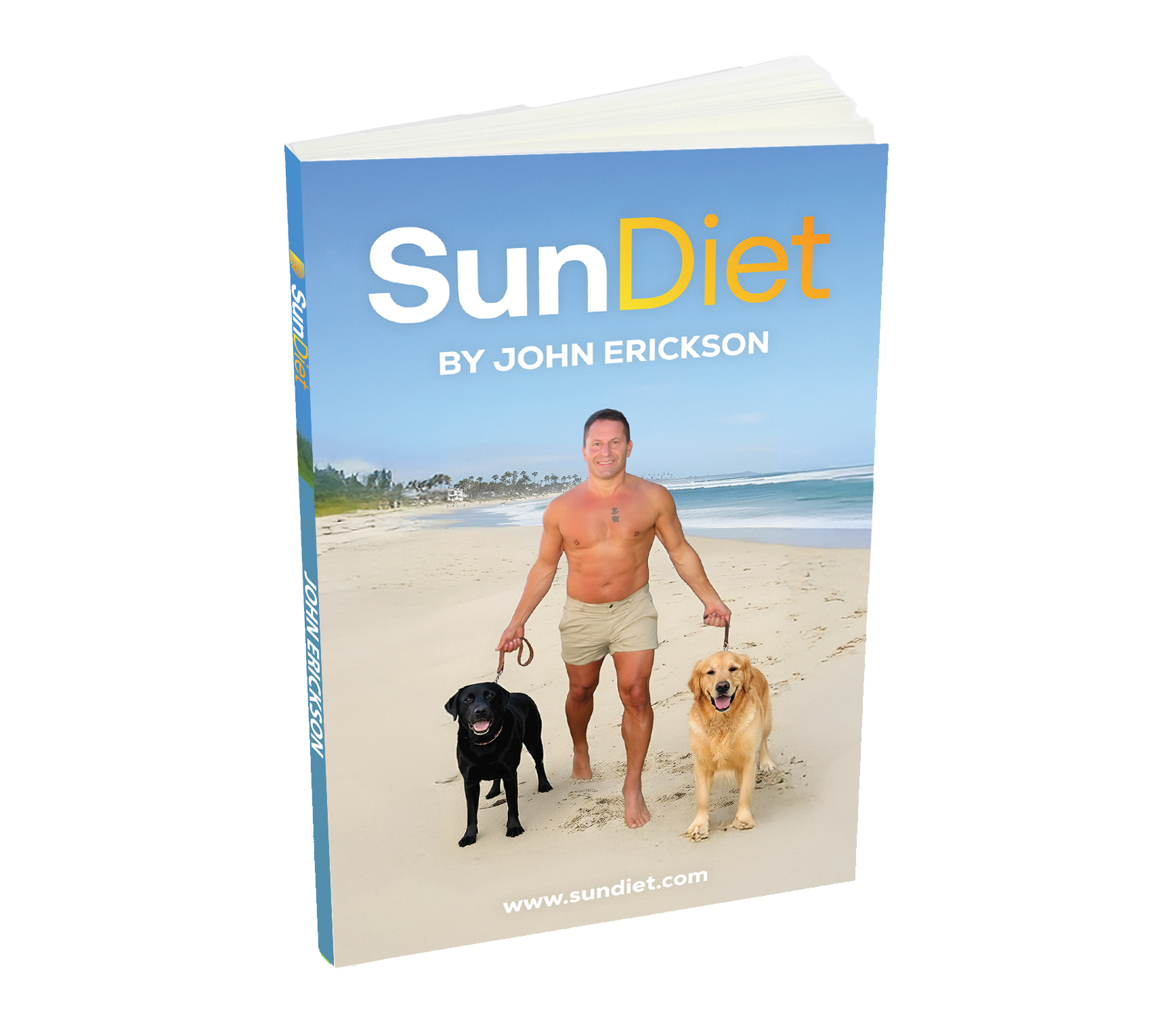
The SunDiet™ book offers a step-by-step guide to help you synchronize your body with its natural circadian rhythm. By embracing a healthy light environment, steering clear of hidden risks, and making mindful food choices, you’ll unlock the path to genuine, sustainable well-being. This book empowers you to achieve optimal health—not through quick fixes, but by transforming your daily habits for lasting results.