
The Bodybuilder Paradox
Society treats obesity as the ultimate symbol of physical failure and bodybuilding as the pinnacle of physical success. Yet at the extremes, both paths often arrive at surprisingly similar destinations. The obese person accumulates excessive body fat; the bodybuilder accumulates excessive muscle. One does it through neglect, the other through obsession. One avoids the gym, the other lives in it. Yet both can end up dealing with sleep apnea, high blood pressure, joint degeneration, impaired mobility, and shortened lifespans.
The irony is that the bodybuilder invests thousands of hours, relentless discipline, strict diets, and constant self-sacrifice to build a body that can create many of the same mechanical and physiological burdens associated with obesity. The obese person reaches that burden effortlessly. Different roads, different appearances, but often a similar outcome: carrying more mass than the human body was designed to bear for decades at a time.
This is the bodybuilder paradox: spending a lifetime pursuing the perfect physique, only to discover that extreme muscle and extreme fat may have more in common than either side wants to admit.
SLEEP APNEA
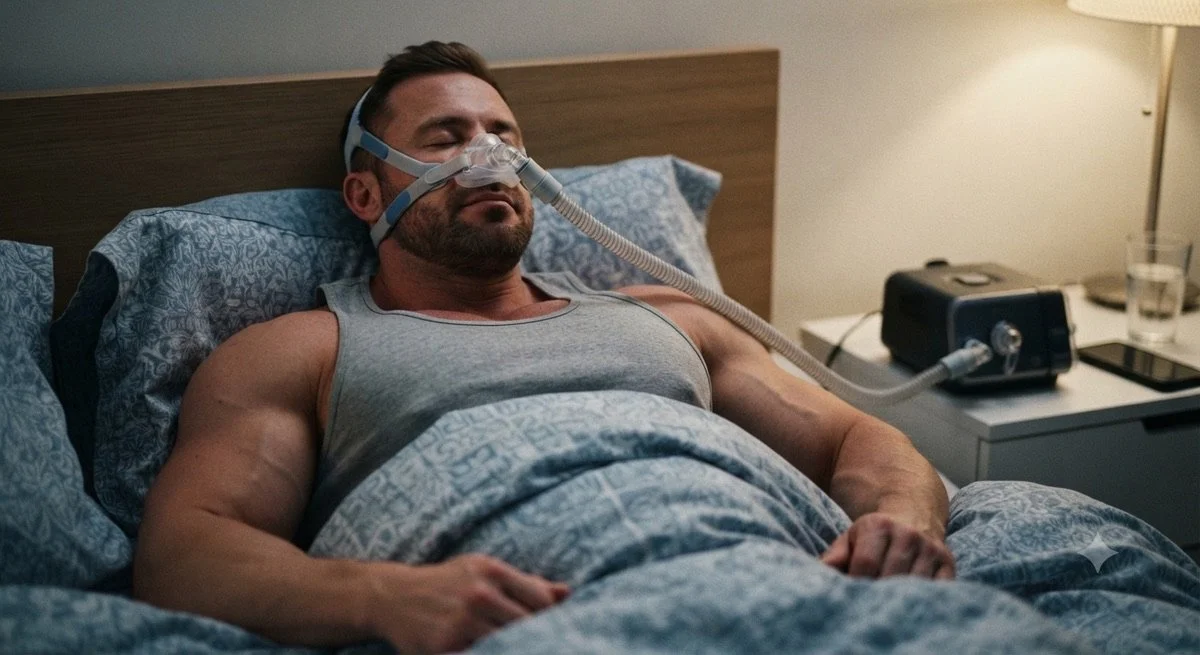
Both bodybuilders and individuals with obesity can develop obstructive sleep apnea. A large neck circumference and excess tissue around the upper airway contribute to breathing obstruction during sleep.
LONGEVITY
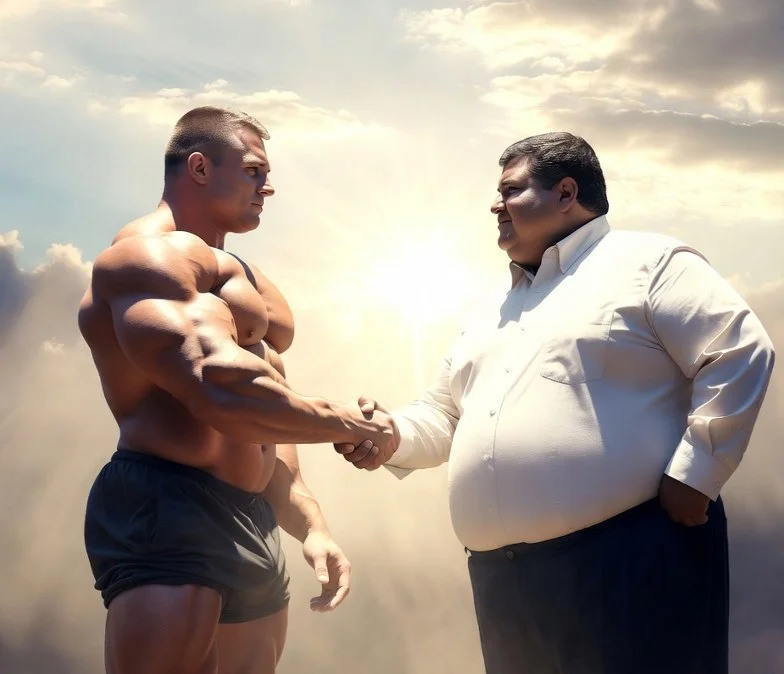
Both bodybuilders and individuals with obesity can face higher mortality risks than age-matched general populations.
JOINT DAMAGE
Both bodybuilders and obese people commonly end up in orthopedic surgery. The bodybuilder’s ego-driven need for more weight puts constant stress on the knees, hips, shoulders, and spine, accelerating wear and tear and inviting early osteoarthritis. Obese people often reach the same destination by a different road: joint replacements, including new shoulders, hips, and knees.
BODY MASS
Maintaining a very high body mass for decades places extra demands on the entire body. Muscles require resources that other organs need more urgently—the brain, heart, bones, and immune system. Muscle, when carried too far and maintained too long, stops looking heroic and starts behaving parasitic.
STEM CELLS
Body fat is treated as repulsive, yet fat is one of the richest sources of adult stem cells in the human body. Known as Adipose-Derived Stem Cells (ADSCs), these mesenchymal stem cells can differentiate into several cell types, including bone, cartilage, and muscle. Fat yields roughly 500 to 1,000 times more stem cells per volume.
The purpose of exercise is not to become as large as possible. The purpose of exercise is to improve nervous system function, build strength, maintain mobility, and develop lean, functional muscle without accumulating unnecessary bulk. Health is not found at either extreme of body fat or muscle mass.
Exercise should work with biology, not against it. Ideally, movement takes place under natural light, grounded to the earth, and away from unnecessary artificial environmental stressors. The goal is not simply to build a bigger body, but to create a more efficient, resilient, and capable one.
Likewise, obesity is not an inevitable consequence of aging. It can be prevented through alignment with proper circadian biology, minimizing exposure to nnEMF, and eating a seafood-rich, seasonal diet. Rather than pursuing extremes of either fatness or muscularity, the optimal path is to support the body's natural design.
The bodybuilder paradox is that both extremes—too much fat and too much muscle—can impose similar burdens on the body. True health lies in strength without excess, fitness without obsession, and physiology without extremes.